60 Seconds! Reatomized
- 3.7
- Rating
- 1.00M
- Installs
- $3.99
- Price
 Analysis by App-foxy
I approached 60 Seconds! Reatomized expecting a quick post-apocalyptic adventure, but its appeal is more specific than that. It is a darkly comic survival game about making rushed decisions before and after disaster, then living with the consequences. The opening creates immediate pressure, while the later sections turn those frantic choices into a slower test of judgment, patience, and luck.
That contrast is what kept me interested. The game is not simply about collecting supplies or watching a story unfold. It asks me to decide what matters when there is almost no time to think, then challenges me to manage the uncomfortable results. One run can feel absurd, another can feel cruel, and a surprisingly small decision can change the direction of the entire household.
How the adventure turns panic into a plan
The game comes from Robot Gentleman and belongs firmly in the adventure category, although it borrows the tension of survival games and the timing of a puzzle. The setting is a ruined world, but the tone is deliberately strange rather than relentlessly bleak. That balance makes the subject matter easier to approach: I am dealing with danger, scarcity, and family survival, yet the writing and situations often invite a nervous laugh.
You May Also Like

 Blood Strike: 2.5 Anniversary
Blood Strike’s Loadouts Turn Every Drop Into a Tactical Gamble
A close look at Blood Strike’s custom loadouts: how fast access to signature weapons reshapes its battle royale rhythm, rewards preparation, and narrows the gap between fights.

 Pandora - Music & Podcasts
Pandora’s Music Is Easy to Start, but Harder to Recover
Pandora’s strength is its low-effort path from a seed to a station. Its weak spot is how much confidence it asks you to place in connection, setup, and quiet recovery.

 8 Ball Pool
 Is Built on Rivalries, Rematches, and Routine
A close look at the rivalries, rematches, shared routines, and unanswered safety questions that turn a quick pool match into a persistent mobile community.

 Samsung Music
’s Quiet Strength Is Playing What You Already Own
Its reach comes less from spectacle than from dependable access to a personal library. That simplicity is both the app’s strongest retention engine and its ceiling.

 AccuWeather: Weather Radar
AccuWeather Review: A Quick, Clear Forecast for Everyday Decisions
For everyday plans, the best forecast is the one you can understand quickly. AccuWeather makes rain timing, radar, and local conditions easy to act on, with a few trade-offs.

 Hill Climb Racing
Why Hill Climb Racing Still Turns Crashes Into One More Run
A tiny car, a bumpy hill and one more upgrade: Hill Climb Racing keeps resurfacing because its simple chaos makes every near-miss feel personal.
More From Our News Desk



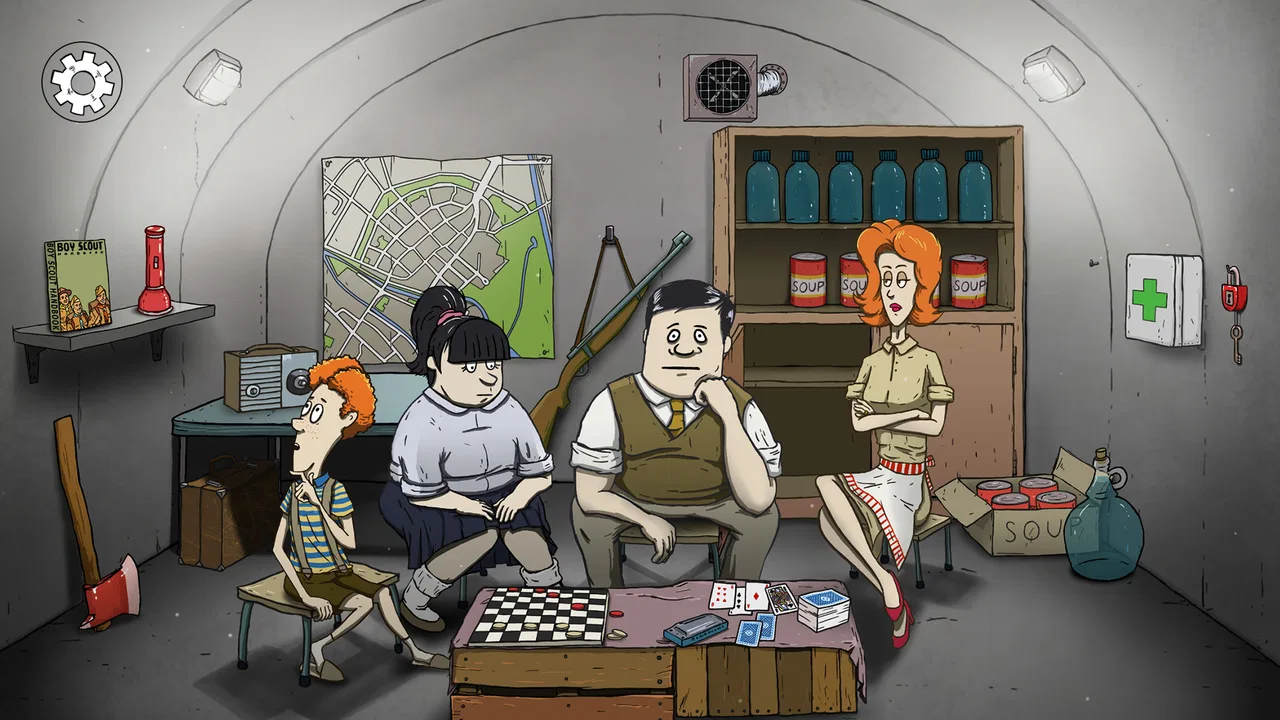
The basic rhythm is easy to understand. A catastrophe is approaching, and I have a short window to prepare. I need to move through the house, gather useful objects, and decide who or what deserves space in the shelter. Once the initial rush ends, the game becomes a more deliberate exercise in keeping the survivors going and responding to whatever trouble arrives next.
The first phase is where the game establishes its strongest early goal: do something useful before the countdown defeats me. That objective sounds simple, but the limited time makes the familiar home feel like a maze of competing priorities. I cannot calmly inspect every room and create a perfect inventory. I have to commit, return to safety, and accept that some valuable things will remain behind.
I found that the best approach was not to chase every visible item. A useful object is only useful if I can reach it, carry it, and still get back in time. That creates a practical route-planning problem. I began to think in terms of short trips and priorities instead of wandering through the house. This is one of the game’s less obvious strengths: movement itself becomes part of the strategy, not just a way to reach the next interaction.
The opening rush rewards priorities, not perfection
New players may instinctively grab whatever looks important, but the countdown punishes that habit. The more I tried to prepare for every possible problem, the more likely I was to waste time or return with an awkward collection of supplies. A better method is to establish a simple order: secure the people I want to protect, take items that support immediate survival, and only then consider unusual or situational objects.
This does not make the opening predictable. The layout and available choices still create uncertainty, and the pressure means that even a sensible plan can unravel. That is important because the game’s early goal is not to achieve a flawless evacuation. It is to make the best emergency decision I can with incomplete information.
The shelter phase changes the mood without removing the tension. I am no longer sprinting through rooms, but the household’s needs continue to create pressure. Supplies are limited, people can become problems as well as responsibilities, and each decision feels like a trade-off between short-term comfort and longer-term survival.
I especially liked how the game makes preparation feel meaningful after the initial scramble. Bringing an item into the shelter is not the same as using it well. The real question becomes when to spend it, who should receive attention, and whether a current problem is serious enough to justify consuming a resource that might matter later.
Progress is measured by better judgment
There is no need for a complicated progression screen to make the game feel like it is teaching me. The clearest progress signal is my own changing behavior. After a few attempts, I stopped treating every object as equally valuable. I began remembering which decisions had created avoidable trouble and which risks had been worth taking.
That kind of progress suits the design. The game’s appeal is not based only on unlocking a stronger character or building a larger collection of permanent advantages. It asks me to become more observant and more disciplined. A failed run can still be useful if it reveals that I spent something too early, ignored a warning, or carried an item that did not justify the time required to obtain it.
The game also creates progress through familiarity with its tone and situations. At first, an unexpected event can feel like a random interruption. Later, I became better at reading the mood of a situation and deciding whether to react cautiously or accept a risk. That does not remove uncertainty, but it makes the uncertainty more interesting because my choices become more informed.
For me, the most satisfying improvement was learning to separate emergency decisions from emotional ones. The characters and their circumstances can make me want to help immediately, but the shelter cannot always afford generosity. The game repeatedly tests whether I can protect the group as a whole rather than react to the most visible problem in front of me.
Why the difficulty curve feels personal
The difficulty does not simply rise in a straight line. It changes as the game moves from physical urgency to resource management and then to judgment under uncertainty. The opening is difficult because of speed and navigation. The shelter is difficult because every choice has a cost. Later pressure comes from having to decide without knowing exactly how events will develop.
This curve can feel harsh when a run collapses after I thought I had prepared well. However, that frustration is closely tied to the game’s identity. A perfectly predictable survival adventure would weaken the dark comedy and remove much of the reason to replay. Here, the possibility of an unexpected setback keeps even familiar routines from becoming completely automatic.
There is still a difference between meaningful difficulty and exhausting repetition. If I want a relaxed adventure in which exploration is rewarded generously, this is not the right choice. The countdown can feel unforgiving, and the shelter phase may punish mistakes that only become obvious afterward. I would recommend approaching it as a game of repeated attempts rather than a single story that must be completed cleanly.
That mindset matters on mobile. I could play a short session, make a few critical decisions, and stop at a natural point, but the game is not necessarily casual in the emotional sense. It may be easy to start, yet a run can leave me thinking about what I should have done differently. It works well for a commute or an evening break when I want an interactive challenge, not when I want something mindless.
What keeps each attempt moving
The strongest retention pressure comes from the question of what might happen if I change one decision. After a failed attempt, I usually know the broad mistake, but not whether the solution is to prepare differently, conserve more carefully, or accept a different risk. That uncertainty gives the next run a clear purpose.
The game’s dark humor also helps. If every setback were presented with solemn seriousness, repeated failure could become tiring. Instead, the strange situations and exaggerated tone make disaster easier to revisit. I may lose because of a poor plan, but the result can still be memorable rather than merely annoying.
Another retention factor is the tension between short-term rescue and long-term stability. A decision that solves today’s problem may create tomorrow’s shortage. This encourages me to look beyond the immediate reward. I learned to treat supplies as future options, not just tools for fixing whatever is currently visible.
One practical tip is to avoid spending a valuable resource simply because it is available. I found more success when I first asked whether the current issue was dangerous, temporary, or likely to return. That small pause is easy to overlook, especially after the frantic opening, but it can make the difference between a controlled run and a desperate one.
A second useful habit is to remember the route through the house rather than relying on improvisation every time. The opening is not only about speed; it is about reducing wasted movement. Planning a compact path helps preserve the seconds needed for a final decision, and it lowers the chance that I will become distracted by an item that does not fit the broader plan.
A third insight is that a failed run should be reviewed in stages. I get more value from asking whether the evacuation, the initial shelter arrangement, or the later response caused the collapse. Treating the whole attempt as one mistake makes the game feel random. Separating those stages reveals which part of my strategy needs to change.
Who will enjoy the pressure and who should skip it
I would recommend this game to players who enjoy resource decisions, replayable scenarios, and humor that stays close to disaster. It is a good fit if you like games where knowledge gradually improves your choices, but where uncertainty still prevents you from solving everything permanently. Players who enjoy experimenting with different priorities should find plenty to discuss with themselves after each attempt.
It is less suitable for someone seeking a straightforward action adventure with constant movement, obvious objectives, and a dependable sense of power growth. It also may not suit players who dislike losing because of a decision that seemed reasonable at the time. The game expects me to accept imperfect information and learn through consequences.
Compared with a conventional survival game, this experience is more compact and more focused on decision-making than on building a large base or mastering complex combat. Compared with a typical narrative adventure, it gives me more responsibility for how the story develops and less certainty that events will follow a comfortable dramatic path. Those differences are the reason to choose it, but they are also the reason it will not appeal to everyone.
For a realistic everyday scenario, I can imagine playing it after work when I have enough attention for a few tense choices but not enough time for a long open-world session. I might begin with one attempt, stop after the shelter situation becomes stable, and return later to see whether a different preparation route changes the outcome. The game supports that kind of stop-and-start relationship better than an adventure that depends on remembering a long chain of dialogue or exploration details.
Practical details before installing
The game is available for $3.99, which positions it as a paid experience rather than a free trial built around constant interruptions. That price makes sense to me if I already know I enjoy replayable survival decisions and dark comedy. If I am unsure about those ingredients, I should first consider whether repeated failure and resource pressure sound enjoyable rather than merely difficult.
It carries a Teen content rating, so I would not treat it as a children’s game despite its cartoon-like presentation and comic tone. The humor is built around catastrophe and survival, and the subject matter is better suited to older players who can appreciate the contrast between grim circumstances and absurd reactions.
The Android release requires version 6.0 or later. The current version is 1.2.7, and the game has reached over a million installs, with an average rating of 3.7 from roughly four thousand ratings. Those figures suggest a substantial audience, while the rating also fits my impression that the design is distinctive but not universally comfortable.
In everyday use, I would keep expectations realistic about the learning curve. The game explains its central situation quickly, but understanding the best response to every problem takes experience. I would not judge it after one unlucky attempt. At the same time, if several runs leave me feeling that the uncertainty is unfair rather than entertaining, changing to a more predictable adventure would probably be the better choice.
My verdict on its long-term pull
The progression works because it improves the player more than it improves the characters. Each attempt gives me a clearer sense of priorities, timing, and acceptable risk, while the game preserves enough uncertainty to keep that knowledge from becoming a complete solution. Goals begin with simple survival, progress appears through smarter decisions, and the difficulty curve shifts naturally from speed to judgment.
That structure gives the adventure a strong identity. It is not a relaxing shelter simulator, not a conventional action game, and not a linear comedy that I finish once and forget. Its best moments come from the uncomfortable space between preparation and consequence, where I know I made a choice but cannot yet tell whether it was wise.
I would recommend 60 Seconds! Reatomized to anyone who enjoys replaying a difficult scenario to understand it better. Robot Gentleman has built a game that turns a short emergency into a chain of meaningful trade-offs, and the dark humor makes those trade-offs easier to revisit. Just be ready to lose, reconsider your priorities, and discover that the most valuable lesson from one run may be knowing what not to carry into the next.
FAQs for 60 Seconds! Reatomized
01What is 60 Seconds! Reatomized?
60 Seconds! Reatomized is a darkly humorous survival adventure game set during a nuclear apocalypse. You play as Ted, a suburban father who has only one minute to search his house for family members, food, water, weapons, and other supplies before the bomb hits. After the frantic preparation phase, you must manage the shelter and make difficult choices that determine who survives.
02How does the gameplay work in 60 Seconds! Reatomized?
The game is divided into two very different parts. First, you explore the house in real time, memorizing its layout and grabbing as many useful items and family members as possible within 60 seconds. Then, in the bunker, you ration supplies, respond to random events, send survivors outside, and make decisions through text-based scenarios. Every playthrough can develop differently because resources and events are unpredictable.
03Is 60 Seconds! Reatomized difficult for new players?
It can be challenging, especially during the first few attempts. The game does not explain every consequence, and some decisions may seem reasonable but lead to illness, injury, starvation, or worse outcomes. However, failure is part of the experience rather than a major frustration. Each run teaches you which supplies matter, how to prioritize family members, and when taking a risk is worthwhile.
04What features does the Reatomized version include?
60 Seconds! Reatomized improves the original game with updated graphics, smoother animations, enhanced sound, new story content, additional game modes, and more varied bunker events. It also introduces extra challenges and scenarios that give experienced players more reasons to return. While the core survival formula remains familiar, the added content makes this edition feel more complete and replayable.
05Can I play 60 Seconds! Reatomized offline, and is it suitable for mobile devices?
The game is designed as a single-player experience and can generally be enjoyed offline after installation, making it convenient for playing without a constant internet connection. Its short preparation rounds and decision-based bunker sections work well on mobile screens and touch controls. Before downloading, check the current store listing for device compatibility, required storage, pricing, and any platform-specific limitations.
Pros
- Fast
- tense survival gameplay fits short play sessions.
- Randomized events make each bunker run feel different.
- Dark humor adds personality to the post-apocalyptic setting.
- Simple controls work well on touchscreen devices.
- Multiple family members create varied survival challenges.
Cons
- Some random outcomes can feel unfair or frustrating.
- Repetitive scavenging may reduce long-term variety.
- The interface can feel cramped on smaller phone screens.
- Limited story depth may disappoint narrative-focused players.
- Difficulty spikes can be harsh for new players.

60 Seconds! Reatomized
Gallery